
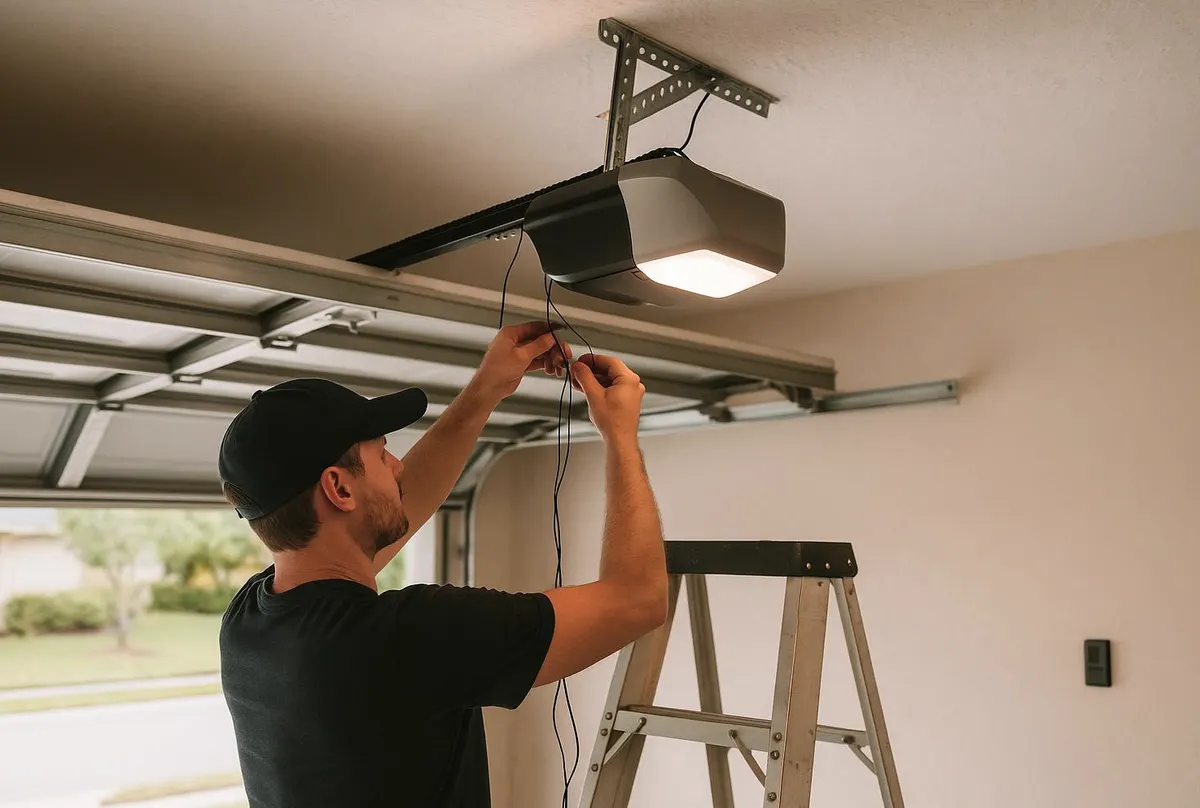
Put off a garage door that won't open and you're betting against Michigan weather. Wait until the first hard freeze or an ice storm to deal with it, and you may find yourself standing in the driveway at 6 a.m. with a car trapped inside, a door that's now frozen shut on top of whatever was already wrong, or a spring that finally gives out while you're wrestling the door open by hand. What's a minor repair in October can turn into a stuck door, a damaged opener, or a trip to urgent care in January. The fix is almost always cheaper and faster when the door is still movable and the weather isn't working against you.
What the Symptoms Usually Look Like
"Won't open" isn't one problem, it's several, and the specific symptom narrows things down fast:
- The opener motor runs (you hear it) but the door doesn't move at all
- The door moves a few inches, then reverses or stops
- The door is dead silent, no motor noise, nothing
- The door won't budge even when you try to lift it by hand with the opener disconnected
- The door opens partway and then feels stuck or binds in the track
- You hear a loud bang or pop, then the door won't move at all
Each of these points toward a different part of the diagnostic process, which is exactly how a technician works through it: start simple, rule things out, and isolate whether the problem is the opener or the door itself.
The Diagnostic Order a Technician Follows
1. Power to the Opener
Before touching anything mechanical, check whether the opener is actually getting power. Garage outlets are frequently on a GFCI circuit, and those trip easily, especially with the humidity swings and storms common here in summer. A tripped breaker, an unplugged cord (sometimes knocked loose by a stored bike or a holiday bin), or a dead GFCI outlet accounts for more "broken opener" calls than people expect. This is a two-minute check and costs nothing to rule out.
2. Safety Sensors and Obstructions
If the opener hums or clicks but the door won't move, the photo-eye safety sensors near the bottom of the track are the next stop. These small sensors need a clear, aligned line of sight to each other. A spider web, a stray leaf blown in during a fall storm, condensation, or a sensor knocked slightly out of alignment will stop the door from closing or sometimes opening at all. Wiping the lenses and realigning the brackets fixes this in most cases.
3. The Manual Lift Test
This is the step that tells a technician whether the problem is the opener or the door itself. With the opener disconnected (pull the emergency release cord), try lifting the door by hand. A properly balanced door should lift with moderate, even effort and stay roughly in place when raised halfway. If it's extremely heavy, won't move, or slams down, the problem isn't the opener, it's the spring system, and no amount of opener repair will fix it.
4. Broken or Weakened Springs
Springs do the heavy lifting, literally, and they're one of the most common reasons a door won't open, especially after a stretch of deep cold. Metal contracts in low temperatures, and a spring that was already near the end of its life cycle often fails during the first real cold snap of the season. A broken torsion spring usually means the door won't move at all, or it moves only a few inches before the opener strains and stops. This is not a safe DIY repair; torsion springs are under heavy tension and require specific tools and experience. Spring replacement typically runs somewhere in the $150 to $350 range for standard residential springs, depending on type and number of springs needed.
5. Cables Off the Drum or Frayed
Next, a technician checks the lift cables that run alongside the springs. A cable that's slipped off its drum, frayed from wear, or snapped will cause the door to hang unevenly, bind in the track, or refuse to move at all. This often happens alongside spring failure, since a failing spring puts extra strain on the cables.
6. Track and Roller Condition
Bent tracks, seized rollers, and ice buildup along the track are a seasonal issue worth checking directly. Road salt and slush tracked in from the driveway, combined with freeze-thaw cycles through spring, can cause rust and grit buildup on rollers and tracks over a year or two. A door that opens partway and then binds or grinds is often hitting a bent section of track or a roller that's no longer turning freely.
7. The Opener's Drive Mechanism
If everything above checks out but the door still won't open, the issue is likely inside the opener itself: a stripped drive gear (common on older chain and belt units), a worn trolley, or a motor that's simply reached the end of its service life. This is usually the last thing checked because it's the least common cause relative to springs and cables, but it does mean replacing or rebuilding the opener rather than repairing the door.
When to Call Ferndale Garage Door
If the manual lift test tells you the door is heavy, uneven, or won't move by hand, stop there and call. That's a spring or cable issue, and it's not safe to force. Ferndale Garage Door handles spring replacement and cable repair for homes throughout Ferndale, Royal Oak, Oak Park, and the surrounding area, and if the door fails outright, especially overnight or before a storm, our emergency garage door service gets a technician out to get the door functional and your home secure again.
Don't wait for the first hard freeze to find out which of these is your problem. Call Ferndale Garage Door today and get it sorted before winter makes it worse.